

How Mexico’s Christmas Traditions Came to Life
At the beginning of the 20th century, the great geographer Antonio García Cubas lamented how winter traditions were being lost in Mexico.

JOIN TODAY and get 10% off your Daily Chela Insider subscription for an entire year.
According to an old Colonial document, it was a man named Pieter van der Moere (better known to history as Fray Pedro de Gante) who first celebrated Christmas in Mexico.
It was December 25 when the friar, born in present-day Belgium, gathered a crowd of Indians and taught them to sing “The Redeemer of the World is Born.” This took place in the early 16th century, somewhere in Mexico City.
That was the first Mexican Christmas.
Posadas and Piñatas
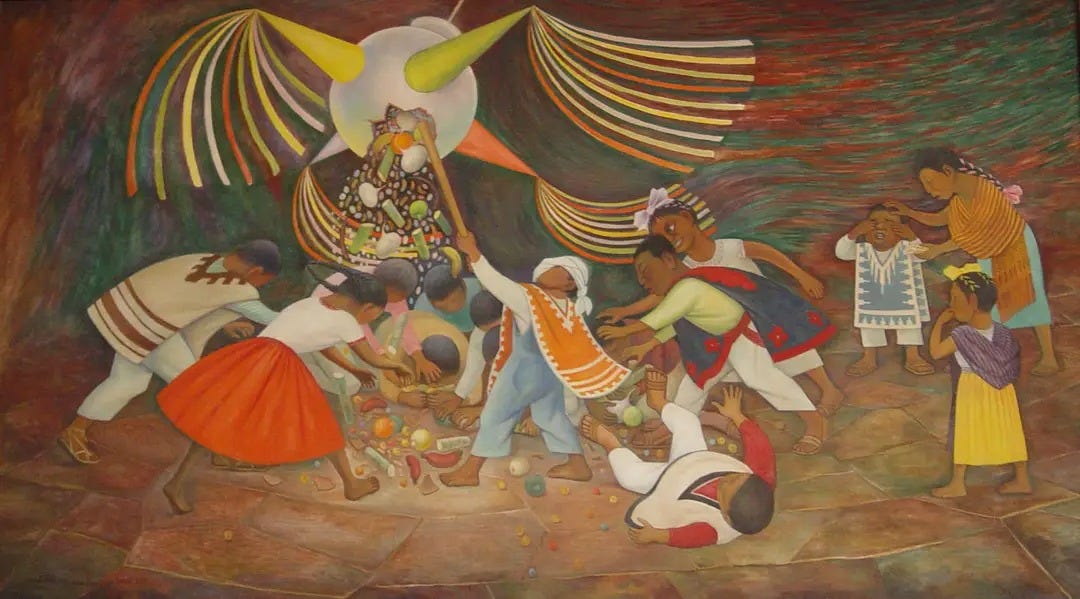
The universally famous piñata was also born in the 16th century, when the friars began to celebrate the “posadas” during the days leading up to Christmas. The piñata was then used as a visually attractive and collaborative allegory (where action was needed from the observers) to evangelize the inhabitants of the region.
In the following two hundred years, in a slow process, the Christmas traditions that became recognized as “eminently Mexican” took shape and local flavor: the posadas, the Nacimiento, the pastorelas, the Mexican piñata and its children’s canticles (I don’t want gold and I don’t want silver, I just want to break the piñata).
Keep reading with a 7-day free trial
Subscribe to The Daily Chela to keep reading this post and get 7 days of free access to the full post archives.